ICANN has announced that, when the application window closed on 12 August, 1,663 domain extensions had been applied for. Of these, 47 failed to make payment on time, meaning that ICANN will proceed with 1,616 applications.
Next Wednesday, ICANN will publish the exact list of applications. Unlike in the previous round in 2012, when all applicants kept their lips tightly sealed, a large number of parties are already openly stating which extensions they have applied for. This provides some interesting insights.
Disclaimer: The analysis below is based on information shared publicly by each of the parties, covering just part of all applied-for extensions. The accuracy of this information cannot be verified. Furthermore, it is unclear in many cases whether these are ‘primary strings’ – i.e. the actual application – or ‘replacement strings’, which can be used if the primary string faces competition from a third party. In addition to the 1,616 primary applications, over 1,100 replacement strings have also been applied for. We will publish a new article in the course of next week with published data.
Nearly 1,000 applications revealed
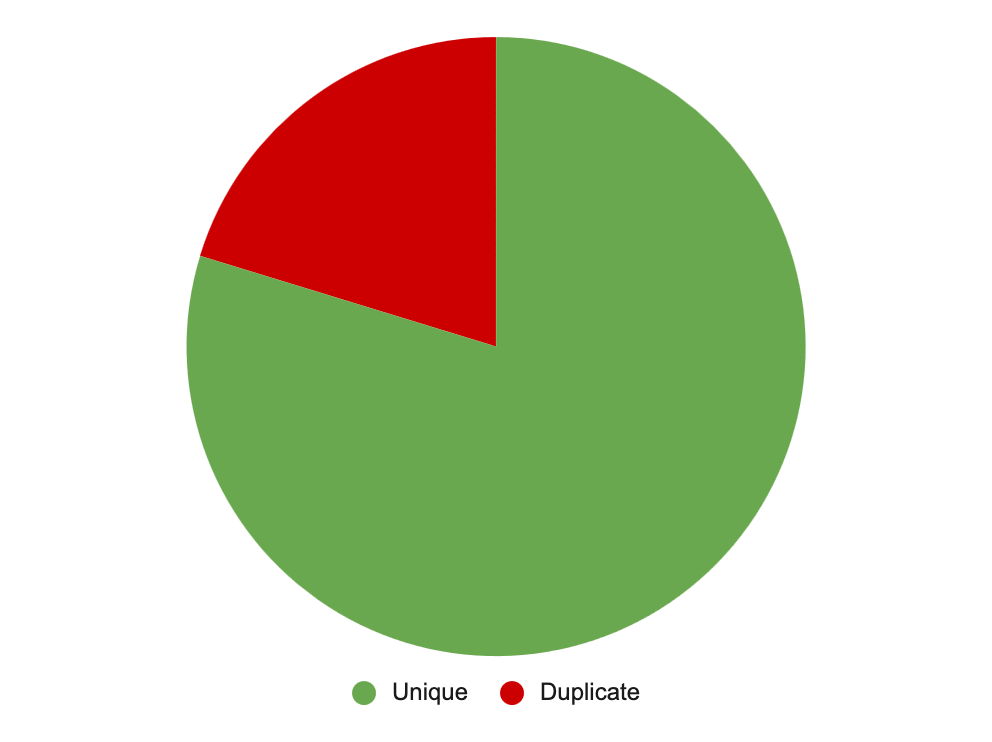
Over the past few weeks, we have received information about 967 applications from various sources. There are many duplicates amongst these. Excluding these duplicates, there are 771 unique applications.
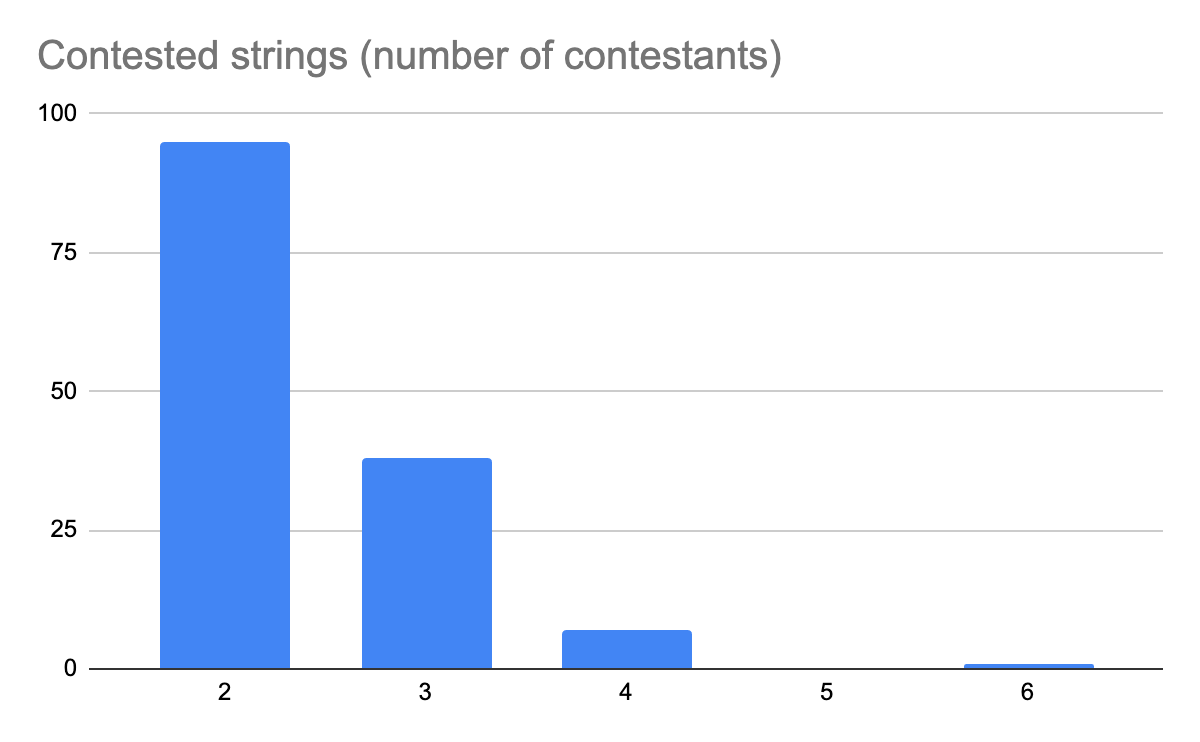
Short extensions (3 or 4 letters) in particular have often been applied for by several parties. For example, there are 95 applications that are submitted by two parties and 46 applications that are submitted by even more. Currently, .bit appears to be facing the most competition, with six parties having already indicated that they have submitted an application for it.
Short extensions are popular
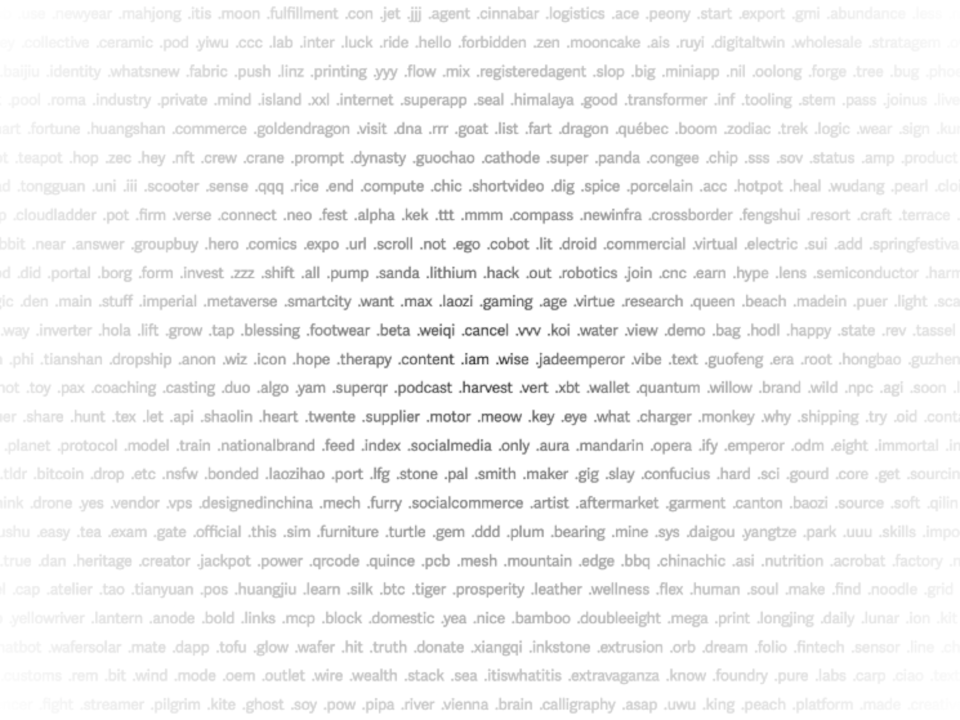
More than half of all currently known applications are for extensions of up to four letters. These are often abbreviations that are already in everyday use, although there are some that seem to have been chosen deliberately for their brevity. For example, Link Freedom Group promotes various applications as ‘quick to type and hard to forget’: .iii, .jjj, .ppp, .qqq, .rrr, .ttt, .uuu, .vvv and .zzz could all be added to the internet.
However, applications are also being made for longer domain extensions. These often involve general, meaningful terms such as .coaching and .influencer.
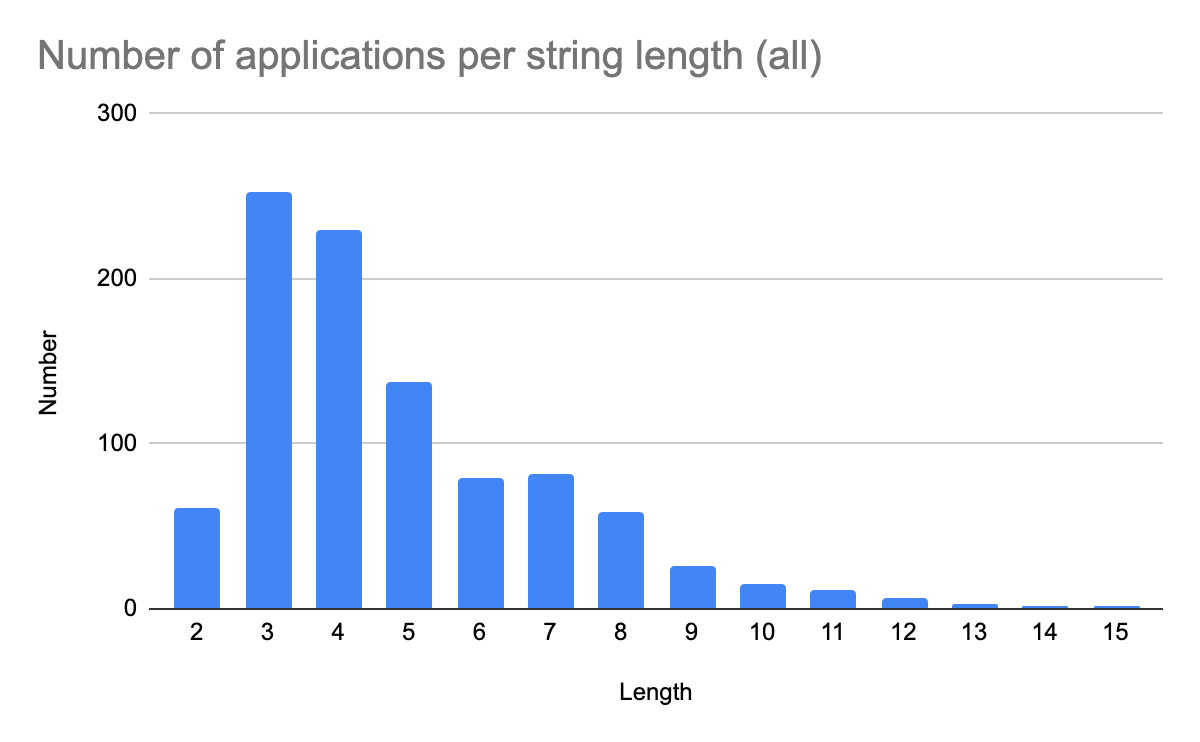
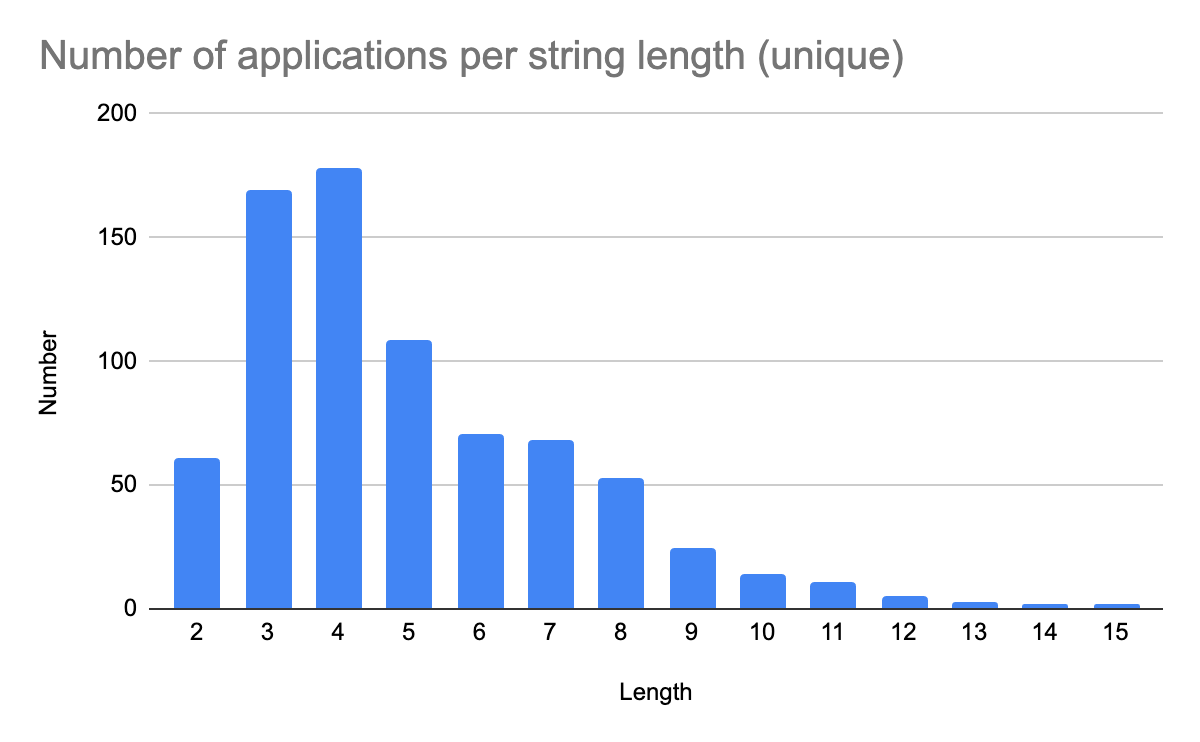
The longest extensions to date are .registeredagent and .designedinchina. The existing two-letter extensions are all Chinese: within the Latin alphabet, the length must be at least three characters.
Portfolio applicants
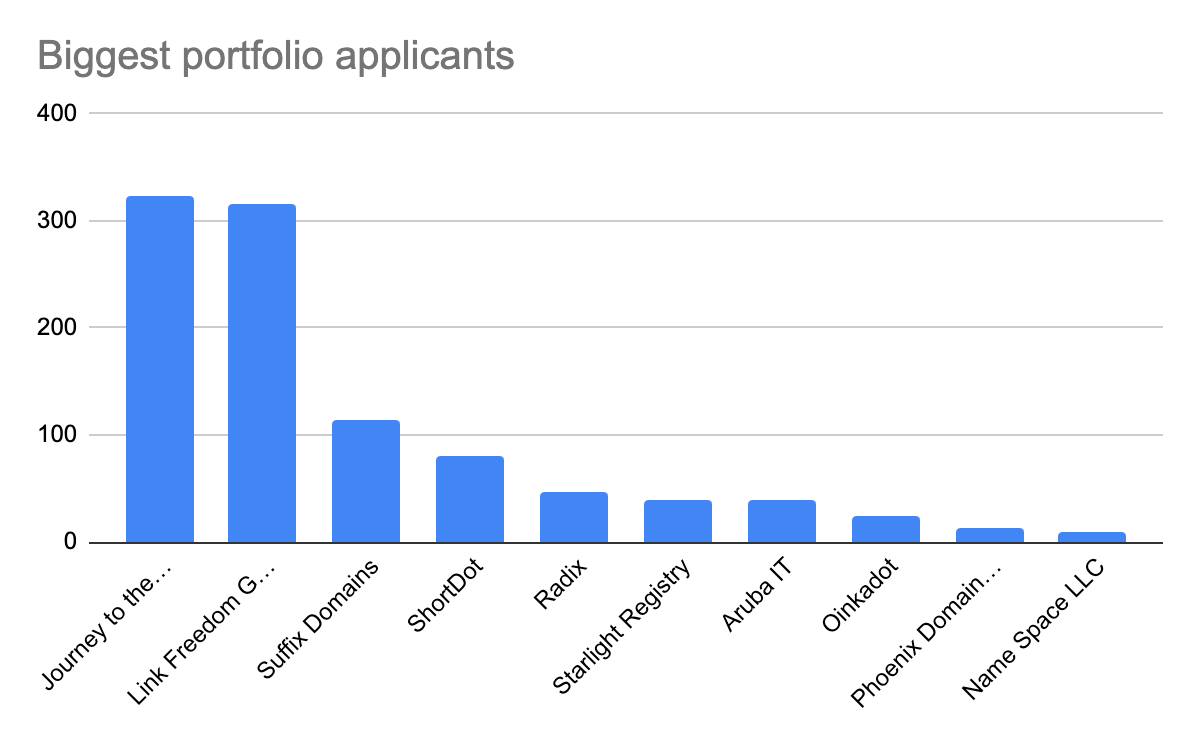
As in the previous round, several parties have once again submitted large numbers of applications, with two notable outliers: Journey to the West (323 applications) and the Link Freedom Group (316 applications). It is unclear in both cases whether they have included ‘replacement strings’ in these figures, so these numbers may need to be halved.
Geographic extensions
It is too early to say how many geographical extensions have been applied for. These are not necessarily parties that actively seek publicity. For example, Dotlocal has applied for .twente; the city of Vienna is applying for the English-language .vienna alongside the existing .wien; and an Italian organisation has applied for .roma.
It will be interesting to see which generic terms have been applied for as extensions, and which of these are also place names. The most striking example is .nice, but more locally, .enter and .made are general English terms that also correspond to Dutch place names. The relevant local authorities will certainly be taking a closer look at these!
The most striking applications
Of the 967 self-nominated applications, several raise eyebrows.
What about .fart? This has been applied for by two parties. Application for the domains .god is also likely to raise questions. .omg, .haha and .itiswhatitis are all along the same humorous line.
A more serious application is that for .island. While the reasoning behind it is clear, has the applicant actually read the rules properly? ‘Island’ is the German and Scandinavian translation of Iceland, and is therefore automatically excluded. That would be a costly mistake.
Journey to the West has published 323 applications, a large proportion of which are clearly aimed at the Chinese market. From .tea to .silk, from .harmony to .longevity and from .kungfu to .panda, the whole of Chinese culture is catered for. However, surprisingly, their list also includes existing extensions such as .fan and .storage. As these cannot be reapplied for, it is unclear how much weight we should attach to their list of 323 extensions.
This same ‘Journey to the West’ is, for the time being, the only organisation to have published Internationalised Domain Names (IDNs): extensions written in a script other than the Western one.
Fancy taking a look for yourself? Until ICANN publishes the list next week, websites such as TLD.forum and RapidWombat provide a good insight – with the same disclaimers as those at the start of this article.